

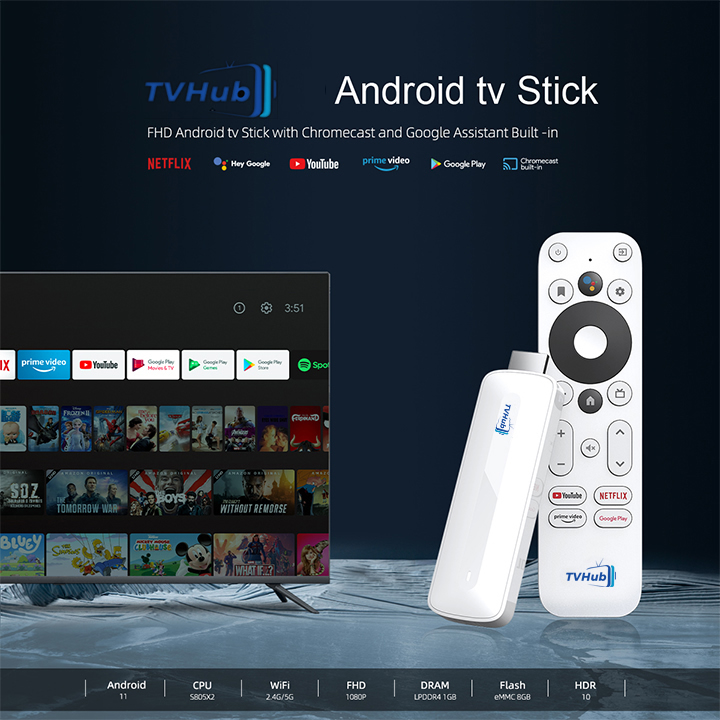
The Android TV Box has become quite trendy lately. People are using it for all sorts of things beyond the Smart TV capabilities. With this device, the viewer can create a whole new world of pre- and postmodern television experiences. For Canadian viewers pairing an Android box with an IPTV subscription, our IPTV services in Canada guide covers the top providers.
Go to your Android TV Box and change some settings. Most users don’t even consider this step. But look, your display can be optimized. There is a ‘Settings’ menu for a reason. Inside this menu you pretty much need to visit three different options: resolution, refresh rate and color settings. If your TV box supports it, then 4K resolution will pack many more pixels inside than standard or high definition makes for a much sharper picture. And when it’s about appearance issues of your picture, this is the area where most steps of DIY optimization are concerned—whether your image is sharp or more murky and pixelated.
When using a virtual private network (VPN), your streaming experience improves decidedly for simple reasons of privacy and access. When you connect to the internet through a VPN, you first connect to a secure server before going on to your final destination. Your connection is encrypted, and your IP address is hidden—essentially, your are in your own private section of the internet. That’s why you can view all kinds of content supposedly only visible in certain places. Plus, because a VPN allows you to surprise your ISP by going fast when it thinks you’re just in your home office, you can avoid throttling and enjoy smooth streaming.
The typical interface of an Android TV Box can get the job done, but it doesn’t have to be why you settle on that device. For better home screen access to your favorite apps and content, look into “Sideload Launcher” or “Nova Launcher.” They’re customizable to the point you could call them unique, and that makes your home screens more functional and your interfaces more enjoyable to navigate. You’ll see the mentioned launchers’ personalization options in the following pages; however, much of what you’ll learn can also apply to other customizable TV launchers.
The Android TV Box allows you to watch high-definition video content. But half of the equation is audio effects, because you are consuming entertainment meant to sound immersive and engaging. If you want to really get into what you’re watching, enveloping sound is no longer a luxury but a necessity. That’s why we recommend just as strongly that you ensure you are set up to enjoy Dolby sound as we do for telling you your Android TV Box should support 4K HDR10 video. If you don’t have surround sound, you should at least have a capable sound system that can play loud and clean enough for you to enjoy the dynamic range that makes up the “sound of silence” and the “roars of thunder.”
Choosing the right applications for your Android TV Box from among the thousands available on the Google Play Store can feel a bit intimidating. But it really shouldn’t. If you’re sticking with the heavy hitters of pop-culture streaming—Netflix, Hulu, Prime Video, and so on—you’re probably pretty likely to have made a good decision. But don’t stop there. Take a little time to browse some of the smaller, weirder, or more specialized apps. There’s a good chance at least one of them will furnish you with a viewing experience you’ve never quite had before.You can also boost your TV-watching pleasure by using the screen mirroring and casting options built into many Android TV devices. These let you send various kinds of content from your mobile device or computer to the TV. For instance, if you want to show a bunch of your vacation pictures to friends, it’s a lot easier to do it “TV style” instead of passing around your phone. And if you’re working on some type of presentation, you can even use the TV, also for what is essentially a big virtual flip chart.
For optimal performance, your Android TV Box needs to be updated just like any other piece of technology. The manufacturers—usually—do their part and provide updates that’s up to you to get! In most instances, this entails you simply going into the ‘Settings’ menu and finding the relevant sub-menu that lets you know whether you’re behind or not. “Functionality improvements,” the manufacturers say. “Bug fixes.” “Security enhancements.” Whatever the description, do it and do it consistently.
Android TV Box is a multitalented device that can make your viewing experience much more worthwhile if you play to its strengths. Optimizing the box to one’s usage in fact has numerous ways to find it user-friendly and cater to one’s own kind of entertainment. Optimizing something like an Android phone for your own use would involve modifying the core experiences of the device for you – such as how you interact with it and accessibility commands, etc. But optimizing the experience of a TV box is simply making the thing work well for you and your eyeballs.
What Should You Look for in an Android TV Box?
Not every Android box handles modern streaming well, and the spec sheet is where the differences show up. The most important number is memory: 2GB of RAM is the realistic minimum for smooth playback, while 3GB or 4GB gives you room to run a player, an on-screen guide and background apps without stutter. Pair that with at least 16GB of internal storage so you have space for apps, updates and cached data. Boxes that cut corners on memory are the most common reason a stream lags — and it is usually blamed on the service rather than the hardware.
Processing power decides whether 4K plays back cleanly. Look for a modern quad-core chip with hardware H.265/HEVC and AV1 decoding, since most high-resolution streams use those efficient formats. For the picture itself, HDR10 support (and ideally Dolby Vision) plus Dolby/DTS audio passthrough will get the most out of a good TV and sound system. Finally, check connectivity: dual-band 5GHz Wi-Fi is fine for HD, but a Gigabit Ethernet port and a wired connection are what keep 4K rock-solid.
Which Android TV Box Is Right for Your Budget?
There is no single “best” box — the right one depends on how you watch. Casual viewers who mostly stream in HD can get excellent results from an affordable mid-range box, and spending more on flagship, gaming-grade hardware rarely improves everyday streaming. Households that want reliable 4K, a large app library and years of use are the ones who benefit from a higher-tier device with more RAM and a faster chipset.
Budget options such as the Onn Android TV box sold through Walmart have become popular precisely because they deliver clean, current Android TV at a low price — a sensible entry point if you simply want a legitimate, up-to-date streaming device without overspending. Whatever tier you choose, prioritise memory and a wired network option over flashy extras; those two factors do more for streaming quality than anything else on the box.
How Do You Set Up an Android TV Box?
Getting started takes about ten minutes. Connect the box to your TV over HDMI, sign in with a Google account to reach the Play Store, and install any pending system updates before adding anything else — a fully patched box is more stable and more secure. From there you can install your streaming apps of choice and let the interface and program guide load.
The single biggest quality upgrade is on the network side. Where possible, run an Ethernet cable from your router to the box; if a cable is not practical, keep the box on the 5GHz Wi-Fi band with a clear line of sight to the router, or add a mesh node for distant rooms. Once the connection is solid, enabling hardware decoding in your player and matching the output resolution to your TV rounds out a clean setup.
Is an Android TV Box Worth It?
For most cord-cutters, yes. A good Android box turns any television into a full streaming hub, gives you a single interface for live and on-demand content, and costs far less over a year than traditional cable once rentals and fees are counted. The value depends on choosing a legitimate, current device and pairing it with reputable, licensed services — the combination is what delivers a reliable, buffer-free experience that keeps paying off long after the one-time hardware cost.
Frequently Asked Questions
How much RAM does an Android TV box need for smooth streaming?
Two gigabytes of RAM is the practical minimum, and 3GB or 4GB is ideal. More memory lets a player, program guide and background apps run at once without the interface slowing down — important for 4K and larger channel lists. Boxes with only 1GB are the most common cause of stuttering that people wrongly blame on their service.
Should I connect my Android box with Wi-Fi or Ethernet?
Use Ethernet whenever you can. A wired Gigabit connection provides the stable bandwidth 4K streaming needs, without the interference that affects wireless. If cabling is not practical, use the 5GHz band, keep the box near the router, or add a mesh node or powerline adapter to strengthen a weak signal.
Is an Android TV box legal to use?
Yes. Android TV boxes are legal to buy and own — they are simply small streaming computers, no different from a smart TV or phone. What matters is the service you use: legitimate, licensed providers are legal, while services that distribute copyrighted content without permission are not. A legal box plus a reputable provider keeps you on the right side of the law.
What internet speed do I need for an Android TV box?
Around 15–25 Mbps handles HD comfortably, and 35 Mbps or more is recommended for 4K. A stable connection matters as much as raw speed, so a consistent line will outperform a fast but unreliable one. Most home internet plans meet these requirements — a quick speed test confirms you are ready for smooth playback.